
Reference Design
Sapphire Ring
For over a thousand years, sapphire has been treasured as a symbol of wisdom, loyalty, and nobility. From the legendary mines of Kashmir and Sri Lanka to today's finest collections, exceptional sapphires continue to captivate with their remarkable beauty, durability, and rarity.
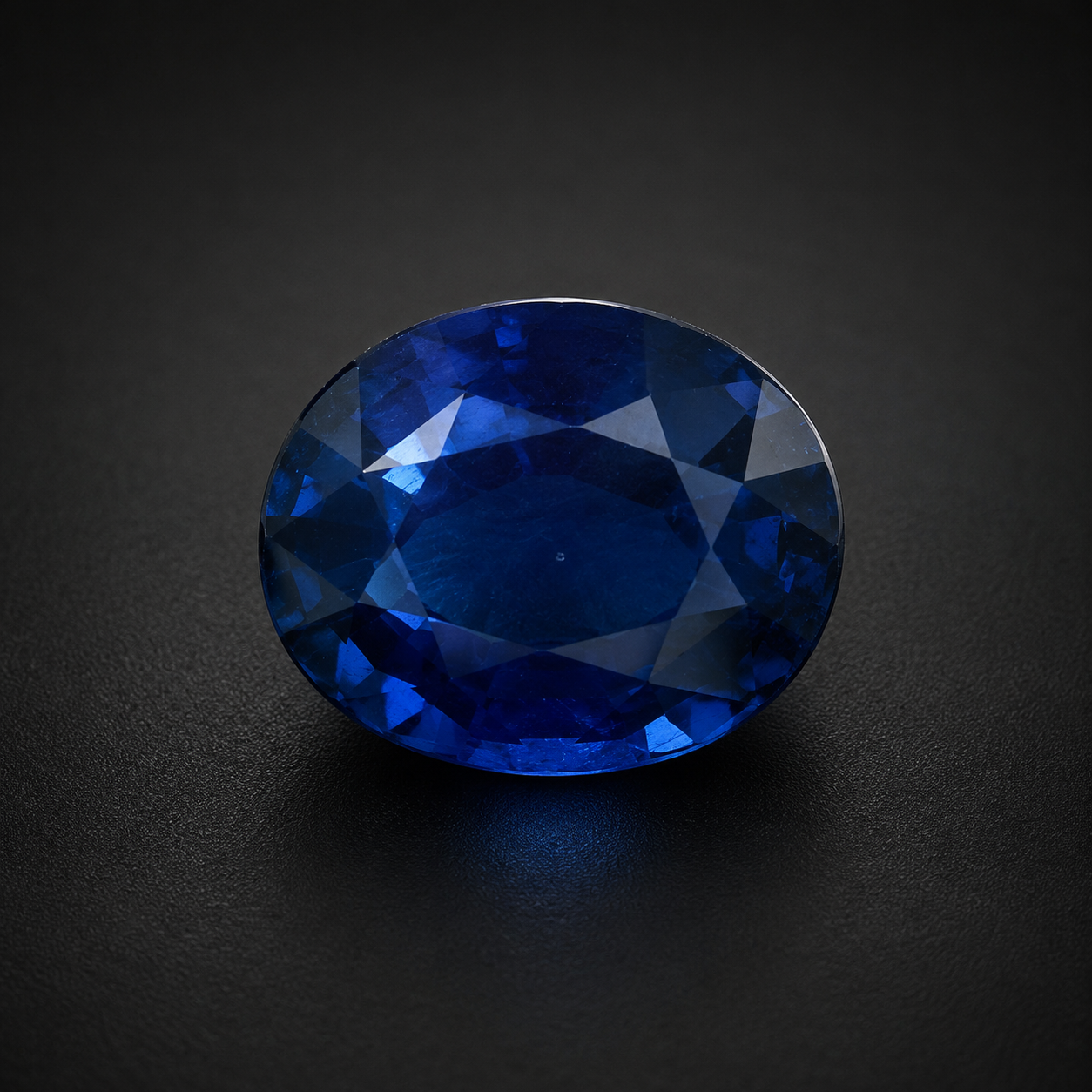
Selected for its exceptional color, impressive size and remarkable brilliance, this natural sapphire exemplifies why Sri Lanka has remained one of the world's most celebrated sources of fine blue sapphires for centuries.
Its vivid blue color remains bright and transparent rather than appearing dark or inky, revealing flashes of electric blue as the gemstone moves through changing light. This interplay of color, brilliance and contrast is one of the hallmarks of exceptional natural sapphire.
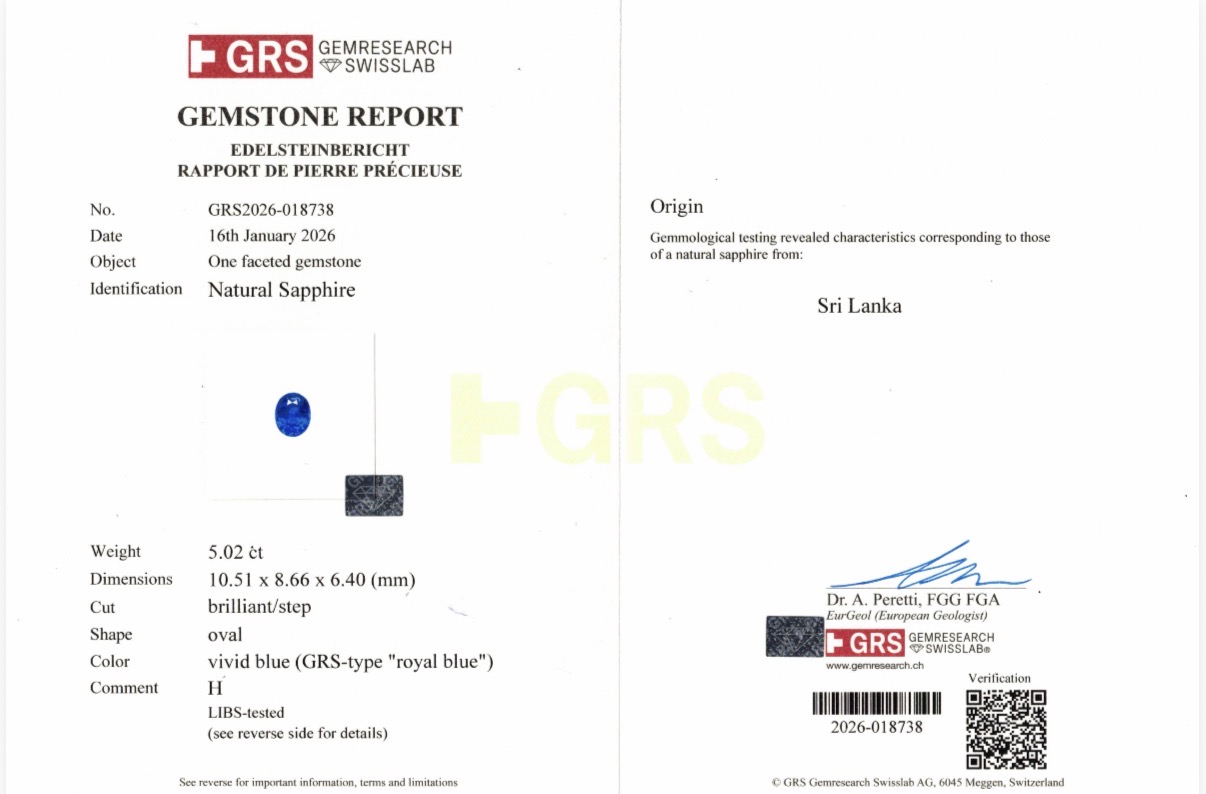
Some people assume laboratory color names are simply marketing terms. In reality, designations such as Royal Blue provide an independent description of an exceptionally precise balance of hue, tone and saturation that would otherwise require pages of technical language.
At Strata Gems we encourage clients to evaluate the gemstone first. The laboratory report then serves as independent confirmation of the qualities already visible in the stone.
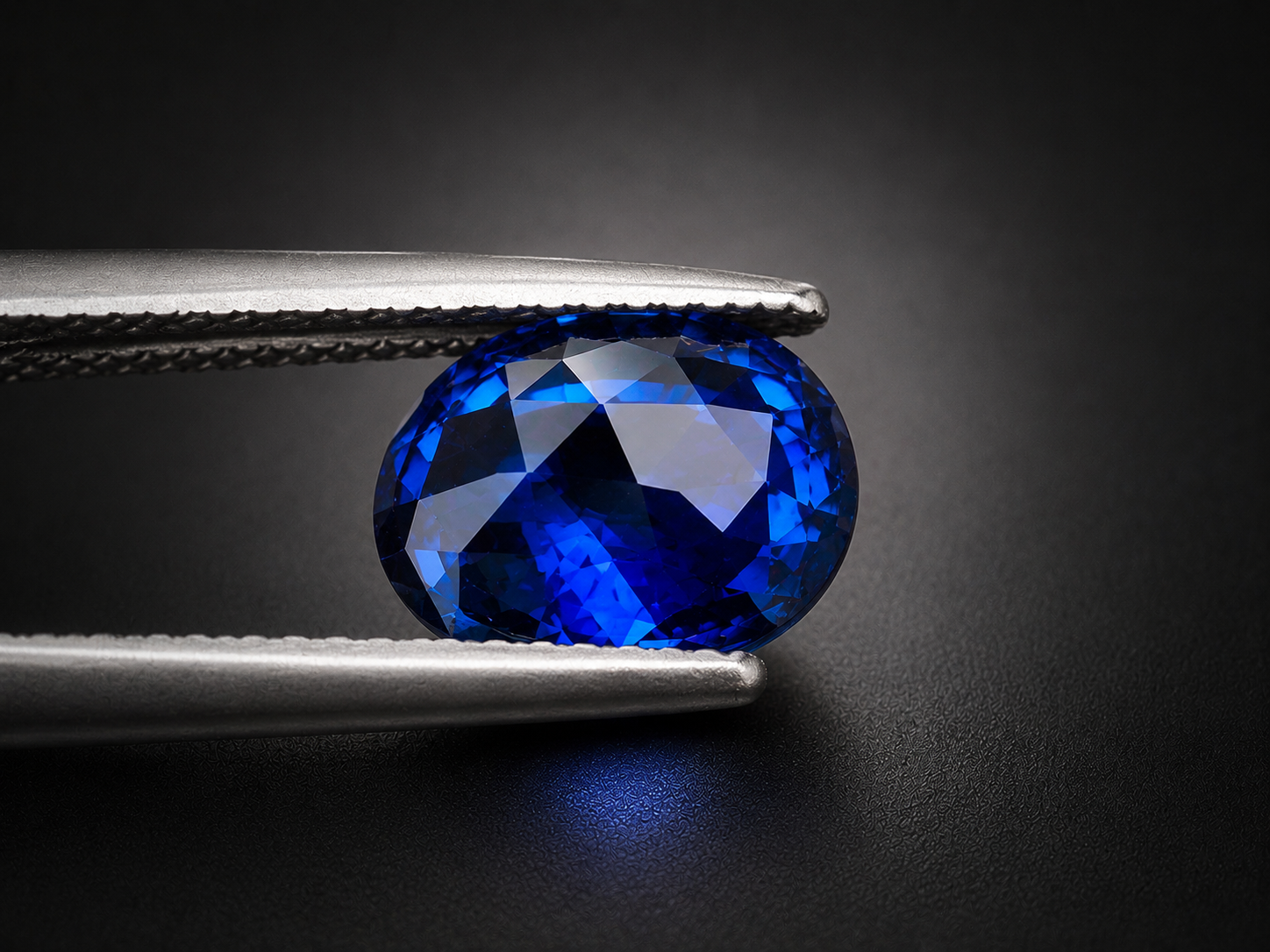
This sapphire immediately stood apart for the balance of richness, brightness and presence in its blue color. It possesses depth without becoming overly dark, and it continues to reveal flashes of vivid blue as the stone moves through changing light.
Fine sapphire is not judged by a color name alone. Tone, saturation, transparency, cutting and the distribution of color must work together. A stone may carry a respected laboratory designation, but its true character can only be understood through direct observation.
I chose this 5.02 carat Sri Lankan sapphire because it represents the standard I want Strata Gems to reflect: meaningful beauty, independent documentation, complete disclosure and careful evaluation beyond the words printed on a report.
Reference designs will illustrate how sapphire can be interpreted across classic and contemporary settings. Final proportions, metal choices and supporting stones are developed around the individual gemstone and the person who will wear it.


Reference imagery will be added as designs are completed.
Exceptional sapphire is the result of several qualities working together. Hue, tone, saturation, clarity, cutting, treatment and origin all contribute to the beauty, rarity and value of the individual gemstone.
Color is the most influential factor in blue sapphire evaluation. Fine stones combine an attractive blue hue with enough saturation to appear rich and vivid, while maintaining a tone that does not become overly dark, gray or inky.
Tone describes how light or dark the sapphire appears, while saturation describes the strength and purity of its blue. The finest stones achieve depth without sacrificing brightness, transparency or visible life.
Natural sapphires commonly contain internal features. Their location, visibility and effect on transparency or durability matter more than absolute cleanliness. Some inclusions also help document natural origin and geological formation.
Cutting determines how effectively a sapphire returns light and displays color. A well-cut stone balances brilliance, face-up size and color distribution while minimizing windows, extinction and unnecessary weight.
Heat treatment is widely accepted in the sapphire market and may improve color or clarity. Untreated sapphires of exceptional quality are much rarer. Diffusion, fracture filling and other significant treatments must be clearly identified because they can materially affect value.
Kashmir, Sri Lanka, Myanmar, Madagascar and other localities have produced important sapphires. Origin can add historical and collector context, but it should support—not replace—an evaluation of the stone's visible beauty, treatment status and overall quality.
Sapphire is not defined by a single ideal shade. Its appearance is created by the interaction of hue, tone, saturation, transparency, cutting and light. Understanding those relationships is more useful than relying on a color name alone.
Hue describes the dominant color and any modifying color, such as violetish blue or slightly greenish blue. Even subtle secondary hues can change the personality and market appeal of a sapphire.
Tone describes how light or dark the gemstone appears. A sapphire may possess strong saturation yet still lose beauty if the tone becomes so dark that the stone appears closed or inky.
Saturation describes the intensity and purity of the blue. Fine sapphires display strong color without becoming dull, gray or overly dark.
Kashmir sapphires are celebrated for a soft, velvety visual character. Sri Lankan sapphires often show brightness and lively transparency. Madagascar can produce stones across a broad range of appearances, including examples that visually resemble material from historic sources.
Sapphire has been discovered across several continents, and each locality can produce a distinctive range of color and character. Origin may influence rarity, history and collector interest, but the individual gemstone must always be judged on its own visible quality.
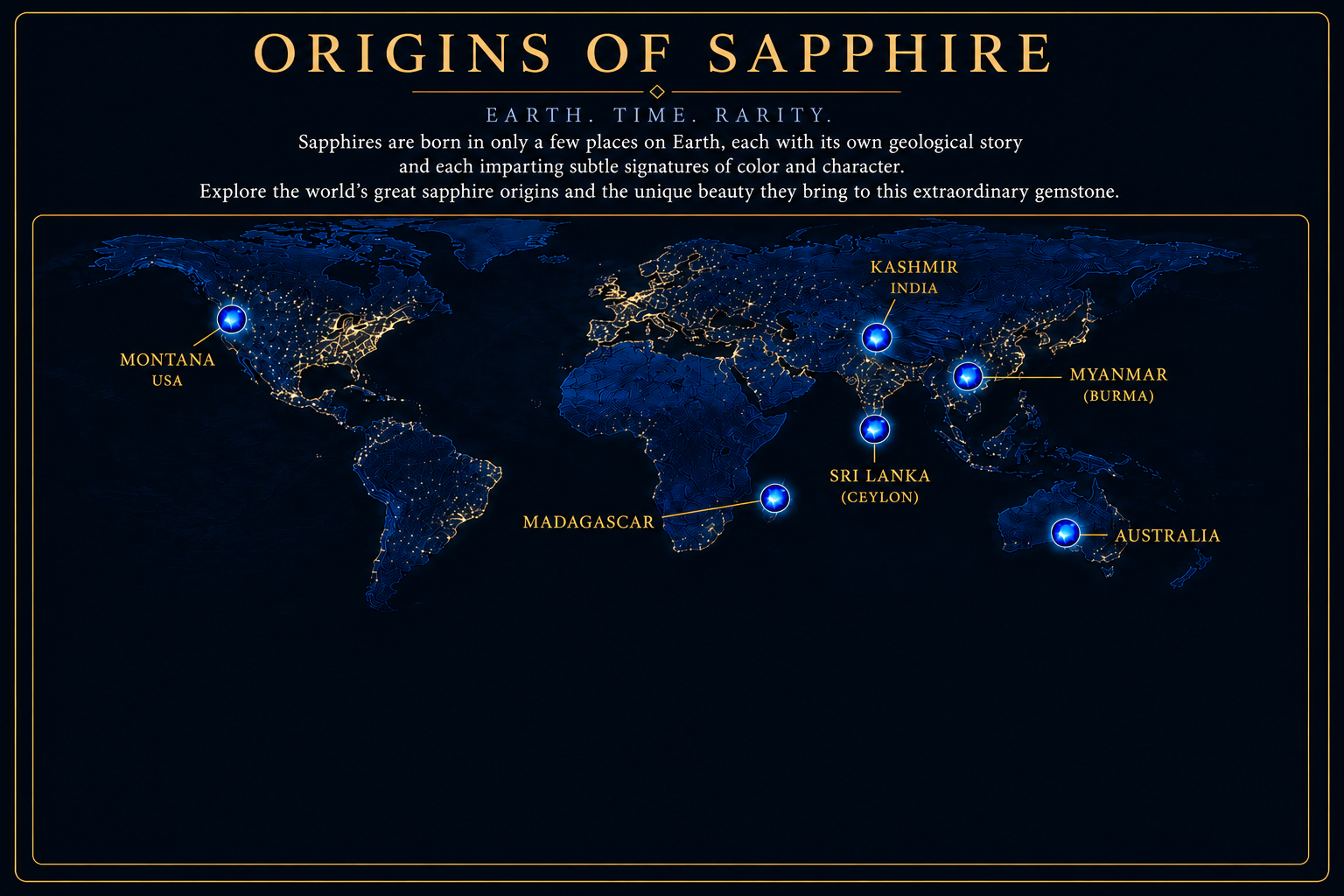
Kashmir sapphires are among the rarest and most celebrated colored gemstones.